
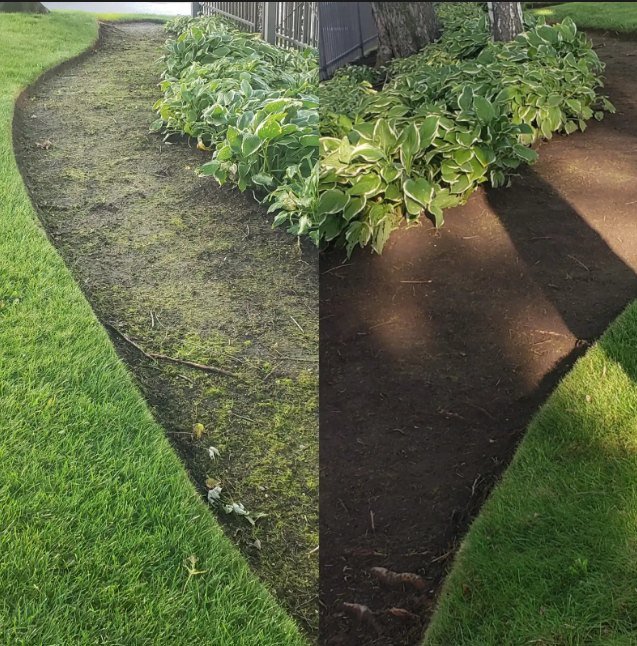
Why edging makes a garden look finished
It is the cheapest visual upgrade on any property, and the one that disappears fastest when nobody maintains it.
Take two identical beds, mulch both, and cut a clean edge on one. The edged bed will look professionally maintained and the other will look like a garden that someone got around to. Nothing else about them is different.
What the edge actually does
It creates a defined line between lawn and bed, which the eye reads as intent. But it is also functional: a properly cut edge is a physical barrier that stops turf creeping into the bed by runner, which is how beds shrink by a few centimetres every year until they disappear.
Half the reason old beds look small is that nobody cut the edge and the lawn simply moved in.
How deep it needs to be
Around ten centimetres, cut at a slight angle away from the bed, with the mulch sitting below the level of the surrounding turf. Shallower than that and grass roots cross it within a season.
The trench also catches mulch that would otherwise wash onto the lawn during heavy rain, which is a small thing that makes a noticeable difference on sloped properties.
How often it needs redoing
- A full recut once a year, usually at spring cleanup
- Light maintenance during the season as part of regular bed care
- On clay soil the edge holds well once cut, because clay keeps its shape
- On sandier soil it needs attention more often
Cut edge versus installed edging
Plastic and metal edging strips look tidy on day one and tend to heave out of the ground over a couple of Ontario winters, at which point they look worse than no edging at all. Frost movement on clay is unforgiving to anything rigid set shallow.
Stone or paver edging works if it is set properly on a compacted base, but that is a hardscaping job with hardscaping costs. For most beds a cut edge, maintained, looks better and costs a fraction.