
Overseeding in clay soil: a Mississauga guide
Seed thrown on clay mostly feeds birds. Seed pressed into open clay becomes a lawn.
Overseeding is how a thin lawn becomes a thick one, and a thick lawn is what keeps weeds out without anything else being done. But on the clay soil under most of Mississauga, the standard advice does not quite work, because the limiting factor is not the seed. It is contact.
Why clay makes it harder
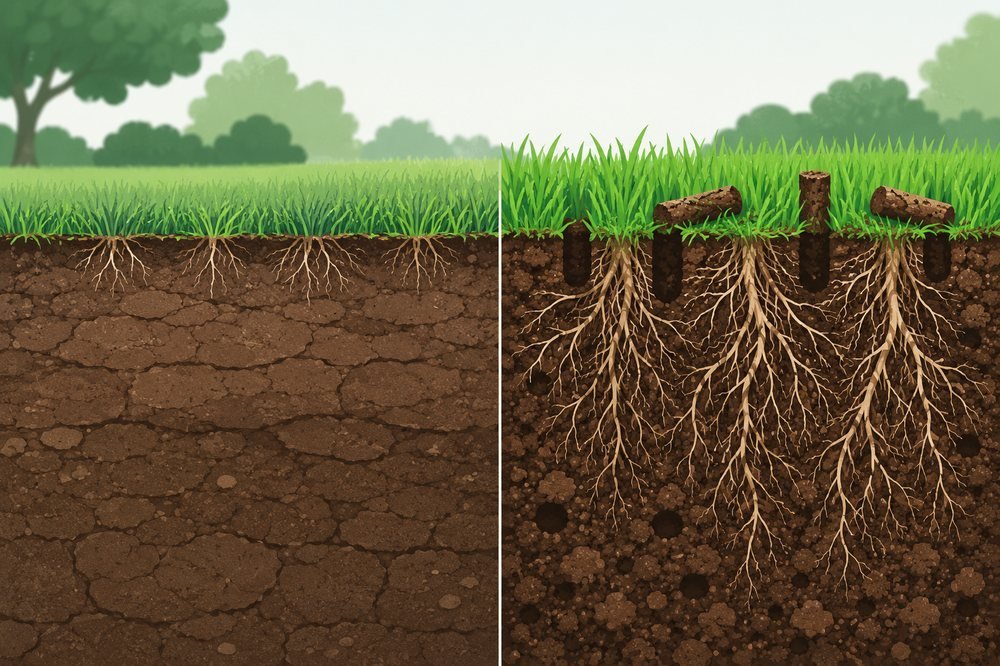
Seed needs to touch soil to germinate. On loose, crumbly soil it settles in naturally. On compacted clay it sits on a hard surface, dries out between waterings, and washes into low spots with the first heavy rain.
The seed is not the variable. Whether it reaches soil is.
The sequence that works
- Core aerate first, so there are open channels for seed to fall into
- Overseed immediately afterwards, while the holes are still open
- Topdress with a thin layer of compost or quality topsoil to hold moisture
- Water lightly and often for the first two weeks, not deeply and rarely
- Stay off it, and raise the mower for the first few cuts afterwards
Seed choice for the GTA
A blend rather than a single species. Perennial ryegrass germinates fast and holds the site while slower species establish. Kentucky bluegrass spreads by rhizome and fills in over time, which is what actually thickens a lawn. Fine fescues handle shade and drought better than either.
Buy a blend suited to your light conditions rather than the cheapest bag. A shade blend on a sunny lawn will thin out by August.
The window that matters
Late August into mid-September. Warm soil, cooling air and a long stretch of growing weather before winter. Spring overseeding competes with weed germination and runs into summer heat before the new grass has rooted deeply.
Watering, and the mistake everyone makes
Established lawns want deep, infrequent watering. New seed wants the opposite: the top centimetre of soil kept consistently damp, which usually means light watering once or twice a day for two weeks. Switch to the deep-and-infrequent pattern once the new grass has been mowed twice.