
Preparing your lawn for an Ontario winter
What you see in April was decided in November. Almost none of it can be fixed in spring.
Winter preparation is unglamorous and largely invisible, which is why it gets skipped. It is also the highest-leverage work in the entire calendar, because everything it prevents is expensive to repair.
Get the leaves off
A wet leaf layer that sits through a freeze blocks light, traps moisture against the crown and creates ideal conditions for snow mould. What emerges in April is not a lawn that had a hard winter, it is a lawn that was smothered in October.
On properties with mature canopy this takes two passes: one in late October and one in mid-to-late November after the oaks finally drop.
Snow mould is not caused by snow. It is caused by what was under it.
Final mow, slightly shorter
One notch below the summer height for the last cut. Long grass mats down under snow and holds moisture against itself, which is the other half of the snow mould equation. This is not an invitation to scalp — one setting is enough.
Protect against salt
- Salt spray from roads and walkways burns turf and evergreens along the edges
- Cedars and boxwood near a driveway are the most vulnerable
- Burlap screening on exposed plants is cheap and works
- The damage appears in April and is often blamed on winterkill
Beds and edges
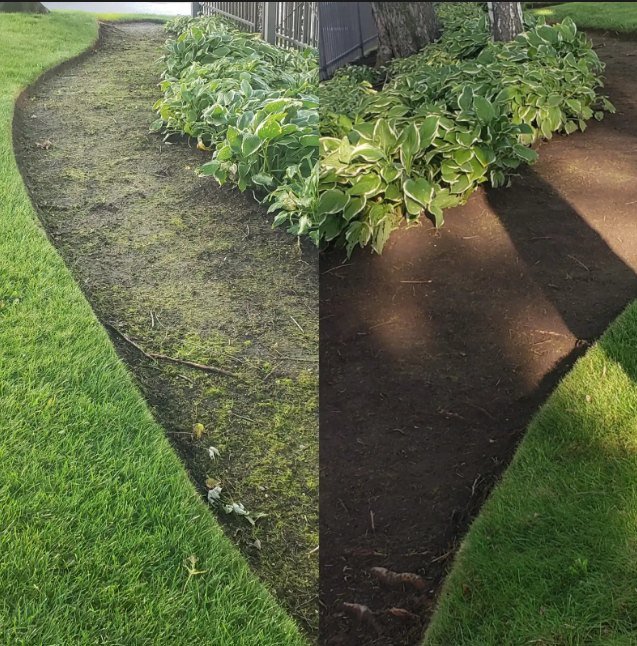
Edge the beds before the ground hardens. A cut edge holds its line through the winter and means the spring cleanup starts from a tidy baseline rather than a reconstruction.
Cut back perennials where the species calls for it, and leave the ones with seed heads standing — they feed birds through the winter and look far better under frost than bare soil does.
Then stay off it
Frozen turf breaks underfoot. Grass blades at freezing point are brittle and shatter rather than bend, and a path worn across a frozen lawn in December is still visible in May. This includes the shortcut everyone takes to the bins.